Your challenges
PFAS removal alone does not eliminate the contaminant. Organizations increasingly need a safe, cost-effective and reliable way to manage and destroy concentrated PFAS streams.
Managing concentrated PFAS streams
Activated carbon, ion exchange, reverse osmosis and foam fractionation can separate PFAS from water, but the PFAS remains concentrated in a residual stream. Organizations are then responsible for managing this PFAS-containing material and the associated costs and liabilities.
Reducing disposal and incineration costs
PFAS-rich waste streams can require transportation, specialized disposal or incineration. As PFAS regulations become stricter and disposal routes become increasingly constrained, organizations need alternatives that reduce their dependence on external waste management.
Why treat concentrated PFAS streams?
Electrochemical oxidation is generally most effective when applied to concentrated PFAS streams. By reducing the treatment volume upstream through technologies such as Vacuum Foam Fractionation, Ion Exchange regeneration or Membrane Concentration, the
Minimizing environmental liability
Every concentrated PFAS waste stream represents an ongoing responsibility. Storage transportation and off-site treatment can create additional environmental, regulatory an reputational risks.
Preparing for future PFAS requirements
PFAS regulations continue to evolve across markets and applications. Organizations increasingly need treatment strategies that address only PFAS removal from water, but also the responsible management and destruction of concentrated PFAS.
How does it work ?
The process
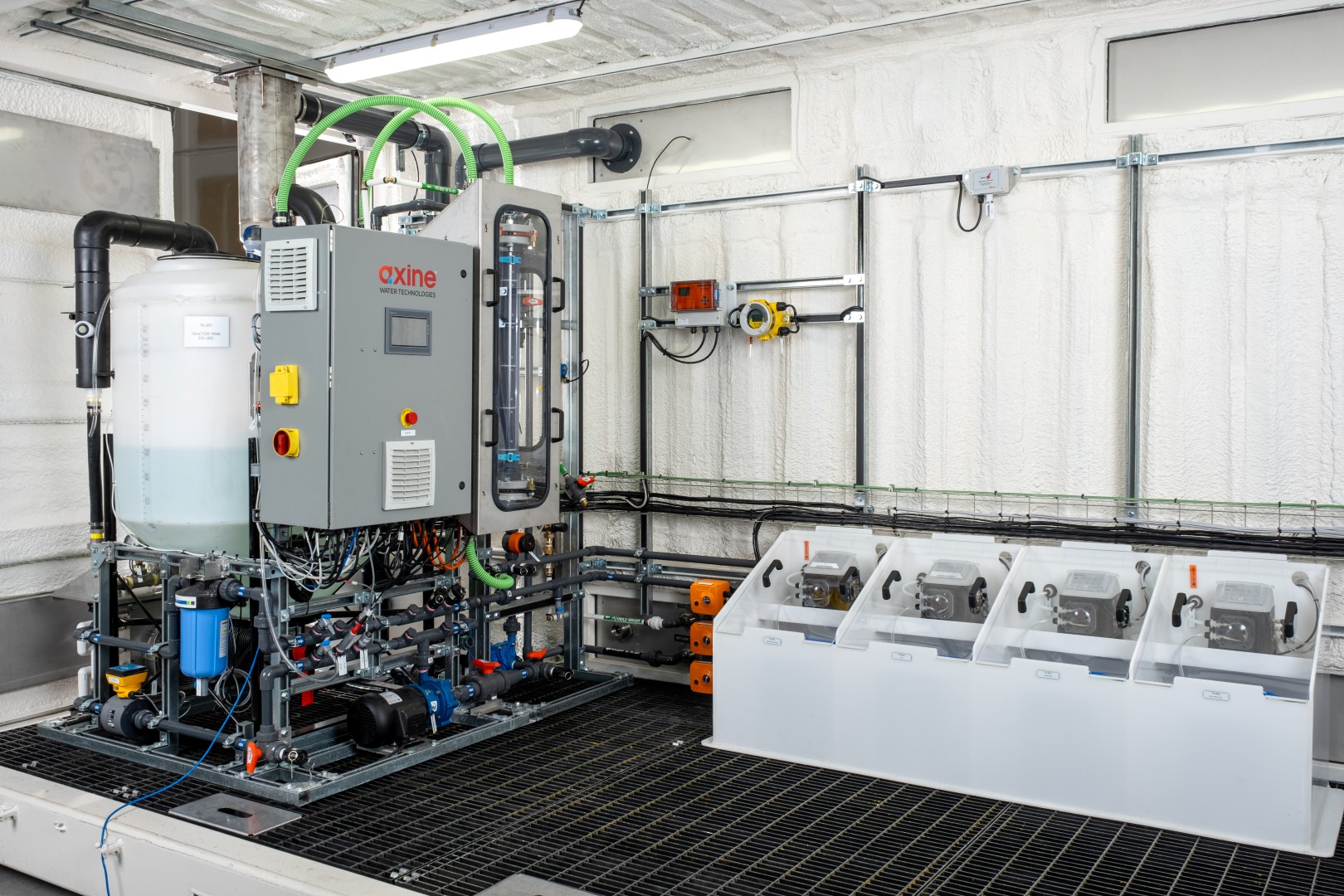
PFAS Destruct uses advanced electrochemical oxidation (EOx) to destroy PFAS and other persistent organic contaminants in concentrated water streams.
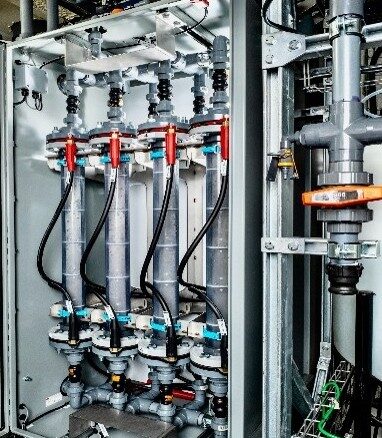
Inside the reactor, an electrical current is applied across proprietary catalyst-coated electrodes, at ambient temperature and pressure. The resulting electrochemical reactions create direct and indirect oxidation conditions that attack persistent organic contaminants, including PFAS.
For PFAS, these reactions break the highly stable carbon-fluorine bonds and mineralize PFAS into simple, stable end products such as gases, water and dissolved ions. The destruction takes place directly within the reactor, avoiding the need to transfer PFAS into another treatment medium.
PFAS Destruct is particularly suited to concentrated PFAS streams, where treating a smaller volume makes intensive destruction technically and economically attractive.
Water quality influences performance
The efficiency and economics of electrochemical oxidation depend on the characteristics of the concentrated PFAS stream. Factors such as conductivity, organic loading, competing contaminants and PFAS composition influence treatment performance and energy consumption. Laboratory and pilot testing are typically used to confirm treatment objectives and optimize system design.
Part of the NSI PFAS Resolve solutions
PFAS Destruct is particularly effective when applied to concentrated streams generated by upstream PFAS separation technologies. These can include foam fractionation, ion exchange regenerant, reverse osmosis concentrate and nanofiltration concentrate.
Within the NSI PFAS Resolve solutions, the treatment sequence can therefore be:
PFAS-containing water → concentration/separation → concentrated PFAS stream → EoX destruction → treated water
This modular approach allows concentration, destruction and polishing technologies to be selected according to PFAS composition, concentration, water matrix and required treatment performance. the PFAS Resolve solution specifically identifies these as complementary building blocks.

Applications
PFAS Destruct is particularly suited for:
- Foam fractionation concentrates
- Ion exchange regenerant
- Reverse osmosis concentrate
- Nanonfiltration concentrate
- Semiconductor wastewater concentrates
- Industrial PFAS wastewater
- Landfill leachate concentrates
- Chemical manufacturing wastewater
- Automotive, manufacturing and surface-finishing wastewater
Laboratory, Bench-Scale & Pilot Testing
Succesful PFAS destruction projects start with a thorough understanding of the PFAS composition and water matrix. The performance and economics of electrochemical oxidation can vary depending on PFAS concentration, conductivity, organic loading and the presence of competing contaminants.
Nijhuis Saur Industries and Axine Water Technologies support customers through a structured validation program:
Desktop evaluation
- Initial assessment based on available PFAS concentrations and water quality.
- Screening of treatment feasibility.
- Evaluation of expected destruction performance and process suitability.
Bench-Scale Testing
- Optimization of operating conditions.
- Evaluation of PFAS destruction rates.
- Assessment of energy consumption and treatment economics.
- Identification of potential matrix effects and interfering compounds.

Pilot Testing
- Validation under real operating conditions.
- Demonstration of treatment performance on site.
- Confirmation of process design criteria and operating costs.
- Generation of engineering data for full-scale implementation.
This phased approach reduces project risk and ensures the selected PFAS destruction solution is technically and economically optimized for each application.
Our positive impact
PFAS Destruct moves PFAS treatment beyond separation by providing a pathway for on-site destruction of concentrated PFAS streams.
Verified PFAS destruction
PFAS Destruct destroys PFAS rather than transferring them from water into another medium. electraCLEAR™ has demonstrated 99.9–99.999% destruction of PFAS, including ultra-short-chain TFA, mineralizing them into simple, stable end products.
Reduce disposal and incineration costs
By destroying concentrated PFAS on-site, PFAS Destruct can reduce the amount of PFAS-containing material requiring external management. On-site electrochemical destruction offers cost advantages over off-site disposal and thermal oxidation/incineration.
Minimize environmental liability
On-site destruction provides a pathway to reduce the amount of PFAS waste requiring storage, transportation and external disposal. This supports a more controlled PFAS management strategy while reducing long-term environmental and regulatory risks.
Compact, modular and scalable
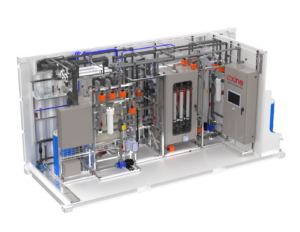
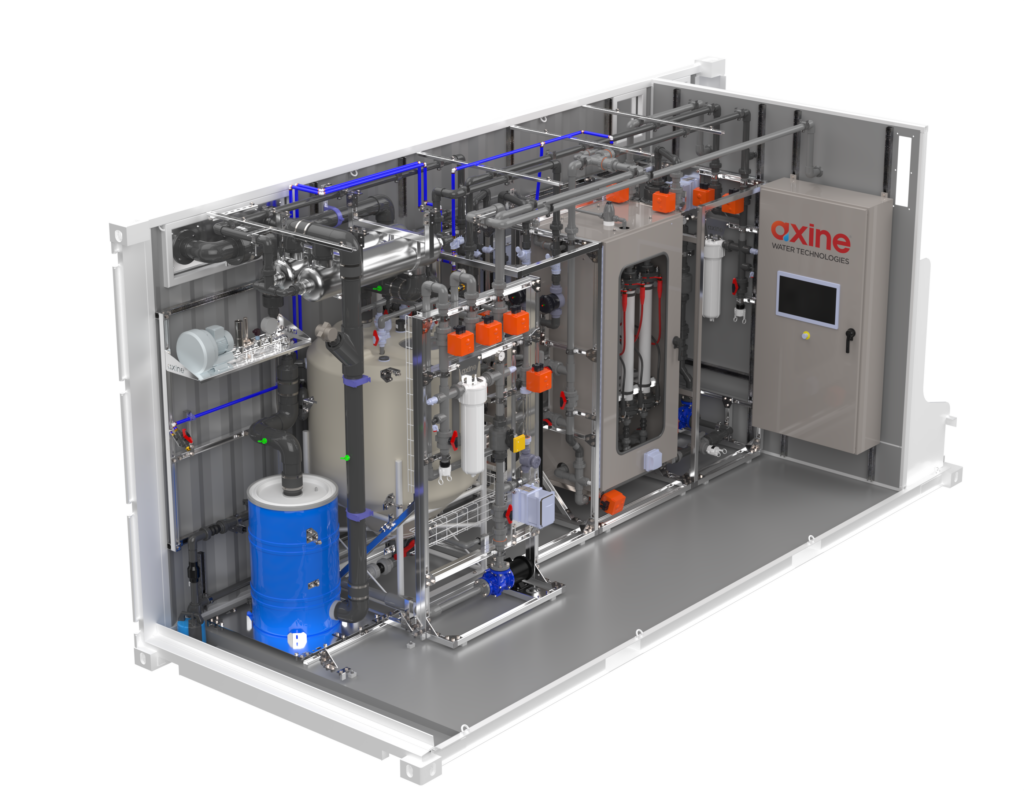
PFAS Destruct can be integrated into new or existing treatment systems and configured according to the required treatment capacity. The modular design supports pilot-scale testing, temporary treatment solutions and permanent installations. Available as modular skids or 20-ft / 40-ft containerized systems, highly automated, with remote performance monitoring.
Key figures
>99.9%
PFAS destruction demonstrated at commercial scale for long- and short-chain PFAS
99.9–99.995%
destruction in the described pilot application treating concentrated PFAS foamate
250,000+
hours of commercial runtime, with commercial electraCLEAR™ systems in operation since 2017.
Suitable for All PFAS Chain Lengths
suitable for long-, short- and ultra-short-chain PFAS within the broader PFAS Resolve treatment concept.
Contact our experts to create an integrated PFAS treatment solution.
Frequently asked questions
PFAS Destruct is an electrochemical oxidation solution for the on-site destruction of concentrated PFAS streams. It is delivered by Nijhuis Saur Industries in collaboration with Axine Water Technologies and forms the destruction building block within the PFAS Resolve portfolio.
Electrochemical oxidation uses an electrical current and specialized electrodes to create oxidation reactions that attack persistent organic contaminants. For PFAS, these reactions progressively break down the molecules and their strong carbon-fluorine structures.
PFAS Destruct is designed for PFAS destruction, rather than simply removing or concentrating PFAS. This makes it complementary to technologies such as activated carbon, ion exchange, reverse osmosis and foam fractionation, which separate PFAS from water but leave a concentrated PFAS-containing residual stream.
Treatment performance can be assessed using PFAS-specific analysis and other analytical techniques. Verification requirements depend on project objectives, local regulations and the specific PFAS compounds being treated. Together with Axine, we can provide destruction data from bench and pilot testing, and that under service contracts treatment results can be guaranteed (to be confirmed with Axine for each project).
PFAS destruction is generally more attractive when applied to a smaller, concentrated stream rather than the full volume of contaminated water. Technologies such as VAL FoamFrac can first concentrate PFAS, after which PFAS Destruct can destroy the resulting concentrate. The PFAS Resolve concept is specifically designed around this concentration-to-destruction approach.
PFAS Destruct is designed for concentrated PFAS streams including foam fractionation foamate, ion exchange regenerant, reverse osmosis concentrate, nanofiltration concentrate and other high-strength PFAS-containing wastewater streams.
Yes. PFAS Destruct has demonstrated destruction of long-, short- and ultra-short-chain PFAS, including TFA, making it particularly valuable as the destruction stage following upstream concentration technologies. The broader PFAS Resolve concept combines different technologies to address long-, short- and ultra-short-chain PFAS.
The purpose of PPFAS Destruct is to destroy PFAS rather than transfer it into another waste stream. By treating the concentrated PFAS directly within the electrochemical reactor, the need for external management of PFAS-containing waste can be significantly.
Yes. This is one of the key applications within the PFAS Resolve concept. VAL FoamFrac concentrates PFAS into a small foamate stream, while PFAS Destruct subsequently destroys the concentrated PFAS. This concentration-and-destruction approach can substantially reduce the volume requiring intensive PFAS treatment.