
Your challenges
Water reuse requires more than advanced treatment. Organizations must balance water quality, operational reliability, regulatory compliance, and long-term sustainability while ensuring recycled water is fit for its intended purpose.

- Industrial
- Municipal
Membrane filtration
- Process water
- Industrial water
- PFAS
- Micropollutants
- Wastewater
- Drinking water
- Source water
- Rainwater
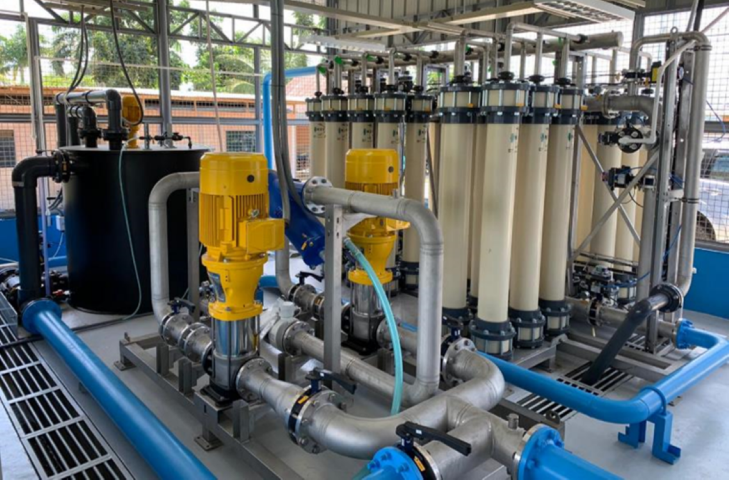
At Nijhuis Saur Industries (NSI), part of Saur Group, we deliver membrane filtration solutions that drive water reuse, resource recovery, and environmental compliance. Our membrane (...)
- Industrial
- Municipal
Water consultancy services
- PFAS
- Micropollutants
- Process water
- Drinking water
- Industrial water
- Wastewater
- Rainwater
- Source water
- Resource Recovery
- Sludge
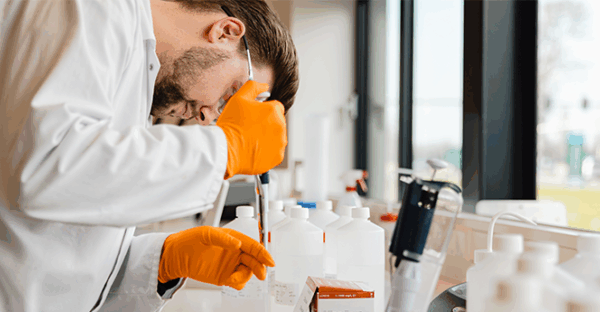
If you are reviewing your (waste)water management strategy and treatment objectives, you may run into several questions. To meet sustainability targets, optimize or debottleneck (...)

- Municipal
- Industrial
Digital solutions
- PFAS
- Micropollutants
- Wastewater
- Drinking water
- Source water
- Rainwater
- Resource Recovery
- Sludge
- Process water
- Industrial water
In today’s rapidly evolving technological landscape, digital solutions are essential for optimizing water management processes. At Saur, we leverage advanced digital tools and (...)
Water reuse reference examples
- Municipal
- Municipal wastewater
- Building facilities
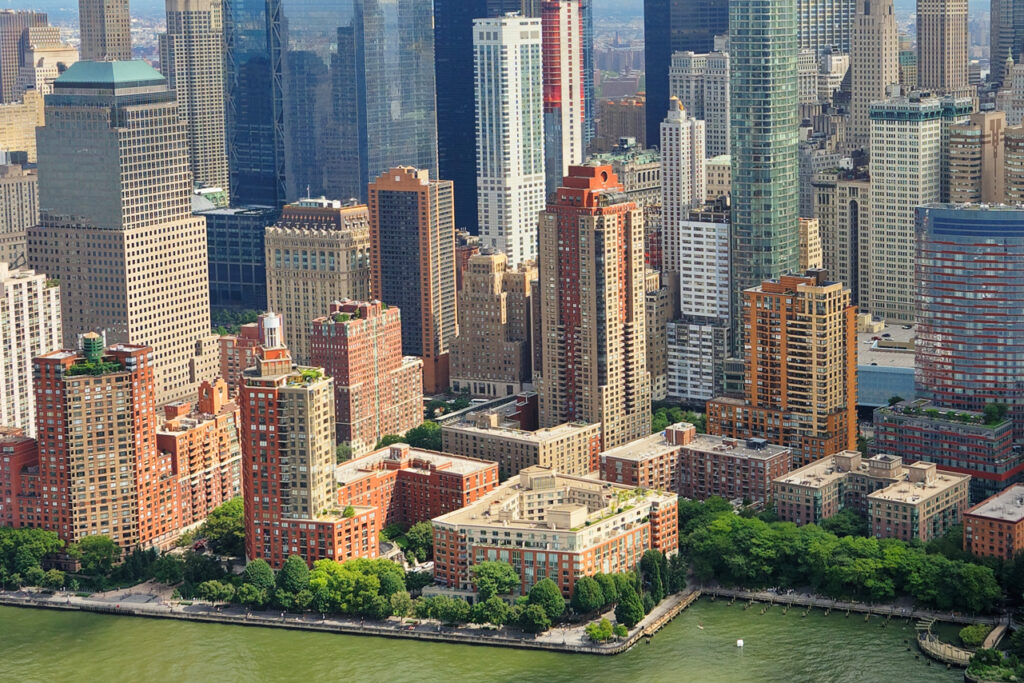
Water reuse systems for residential building to reduce drinking water consumption – Battery Park City
Context
As part of a pioneering initiative for sustainable urban development, Battery Park City in New York became one of the first neighborhoods in the U.S. to adopt decentralized water reuse systems on a building scale. The challenge: design and operate multiple in-building systems that could sustainably treat blackwater, reduce potable water use, and relieve strain on municipal infrastructure — all while maintaining long-term performance and public confidence in a dense urban setting.+
Solution
Natural Systems Utilities, part of Nijhuis Saur Industries, partnered with the Battery Park City Authority (BPCA) to develop and operate six decentralized water reuse systems across eight residential buildings: The Solaire, Tribeca Green, Millennium Tower, The Visionaire, Riverhouse, Liberty Luxe, Liberty View, and The Verdesian. These compact, in-building membrane bioreactor (MBR) systems treat blackwater on-site using advanced technologies including hollow fiber micro-filtration, ultraviolet light disinfection, and biological nitrogen removal to meet New York City Department of Buildings’ direct water reuse standards.
- Industrial
- Food & Beverage
- Waste-To-Energy
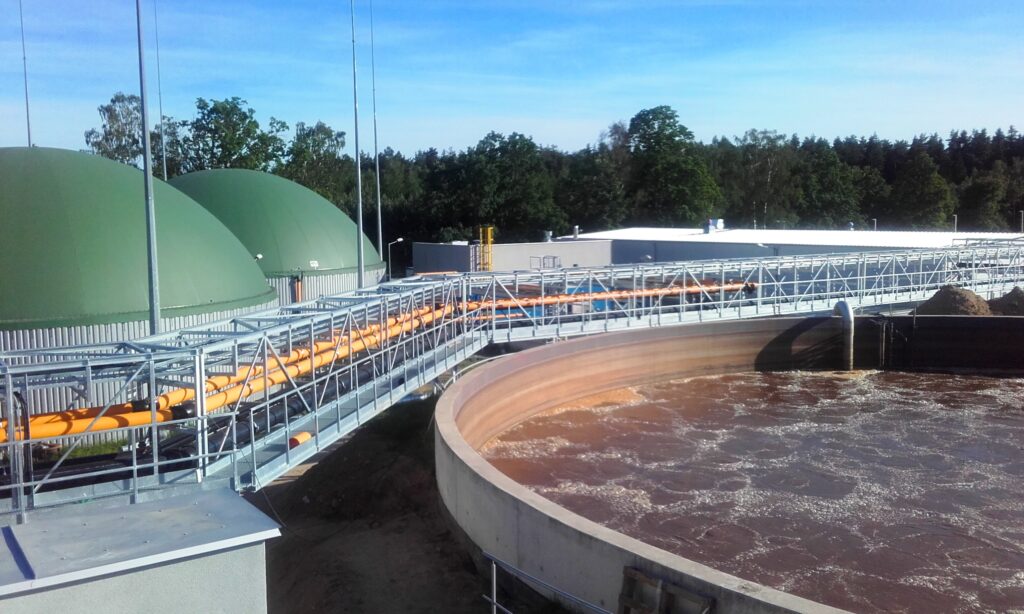
Wastewater treatment and biogas production for poultry processing – Cedrob
Context
Cedrob S.A., a leading and fast-growing poultry producer in Poland, is expanding its slaughtering operations while aiming to minimize environmental impact and secure long-term water availability. Due to site development by extra slaughterlines and rendering facility as well as climate-related pressure on local groundwater resources, additional freshwater abstraction became restricted. At the same time, Cedrob sought to increase production without increasing its environmental footprint.
In partnership with Nijhuis Saur Industries, Cedrob therefore developed an integrated and sustainable water management strategy combining wastewater treatment, water reuse, and waste-to-energy. The objective was to ensure reliable internal water supply, minimize discharge and disposal, and convert organic residues into renewable energy. Today, more than 50 % of the site’s water demand is covered by reclaimed process water.
- Municipal drinking water
- Municipal
- Building facilities
Decentralized water reuse for urban environment to produce drinking-quality water – Canal Café
Context
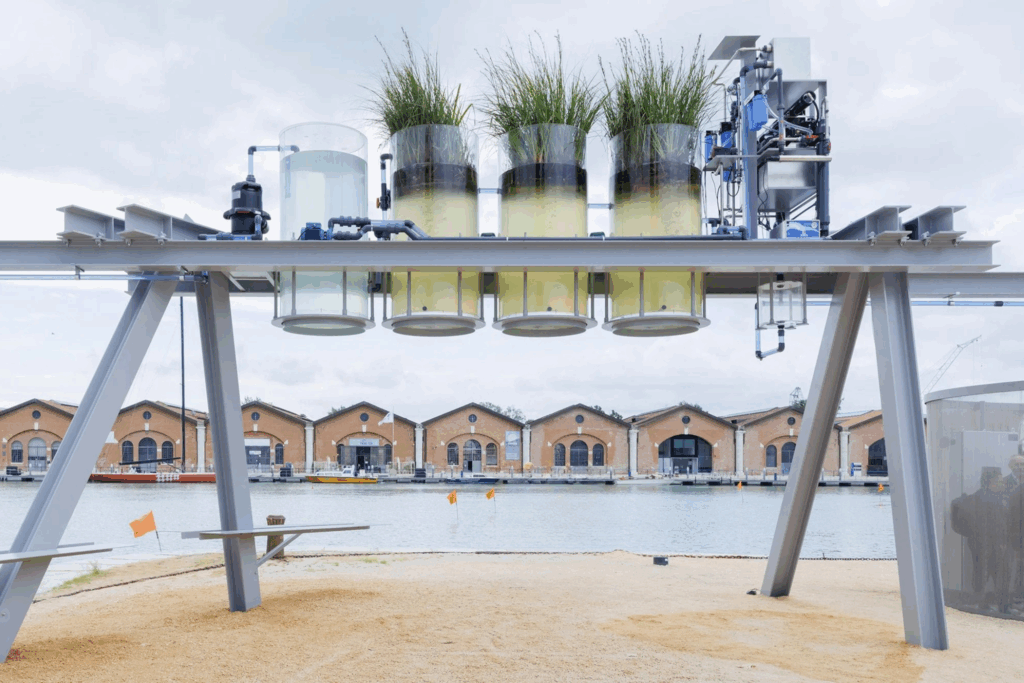
As part of the 19th International Architecture Exhibition of La Biennale di Venezia, Nijhuis Saur Industries (NSI), together with Natural Systems Utilities and Sodai, in collaboration with the world-renowned architecture firm Diller Scofidio + Renfro (DS+R), launched Canal Café: a visionary urban installation that transforms brackish canal water into high-quality espresso. The challenge was both symbolic and technical: prove that water reuse can be safe, sustainable, and culturally inspiring — even in one of the world’s most iconic cities built on water.
Solution
NSI, through its companies Natural Systems Utilities and Sodai, designed, built, and operated a cutting-edge hybrid water treatment system that combines natural processes with advanced filtration. The system purifies canal water to drinking-water standards, used on-site to brew espresso at the Canal Café — a public, interactive space designed by DS+R. The installation challenged perceptions and inspired dialogue on sustainable water reuse, earning international acclaim and the prestigious Golden Lion Award at the Venice Architecture Biennale 2025.
- Energy
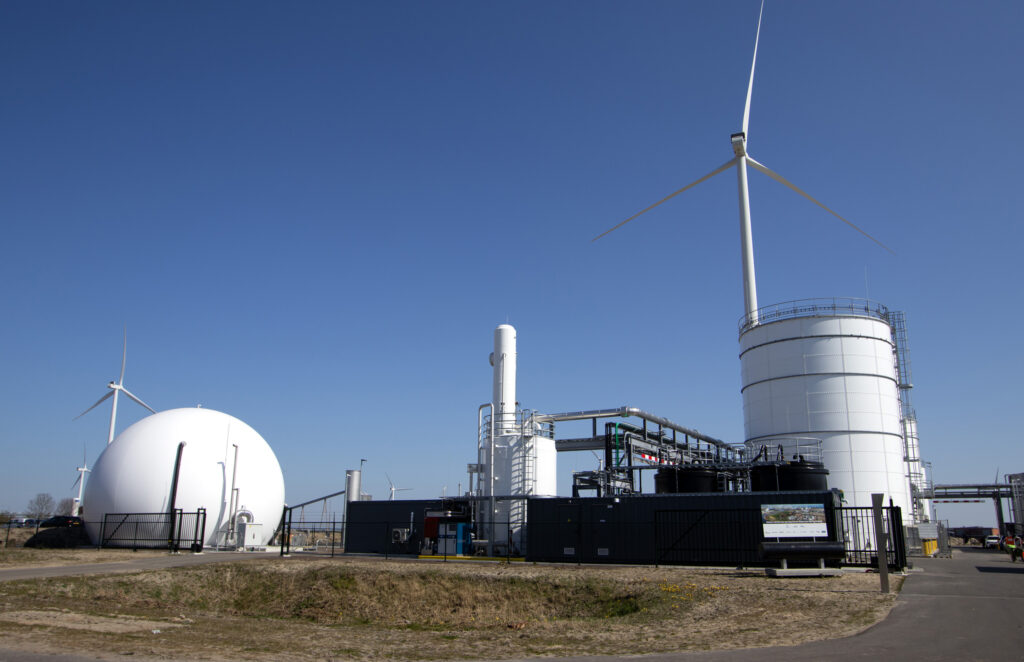
Water reuse and biogas production for industrial operations to reduce dependance on drinking water – DWD Delfzijl
Context
Duurzame Watervoorziening Delfzijl (DWD) is a landmark project in the Netherlands, enabling large-scale industrial transition to alternative water sources. Led by North Water, the initiative provides industrial water from surface water via a treatment facility in Garmerwolde. Nijhuis Saur Industries (NSI) and Econvert Water & Energy contributed significantly with an anaerobic wastewater treatment system and a modular demineralized water (demiwater) installation. The project addresses the growing pressure on drinking water resources and supports sustainable industrial operations in Delfzijl
Solution
NSI and Econvert delivered a comprehensive solution including anaerobic wastewater treatment and a modular demiwater installation. The demiwater system upgrades industrial water to ultrapure quality (<1 µS/cm), suitable for boiler feed and green hydrogen production. The modular setup includes separate containers for UF, RO, membrane degassing, and EDI, allowing off-site construction and rapid deployment. The Econvert-EGSB® treats high-organic wastewater, producing biogas that is desulfurized using Econvert-Dsulph® technology. The biogas is upgraded for use as green gas. The system is designed for scalability and future industrial expansion.
- Building facilities
- Municipal
- Municipal wastewater
- Municipal drinking water
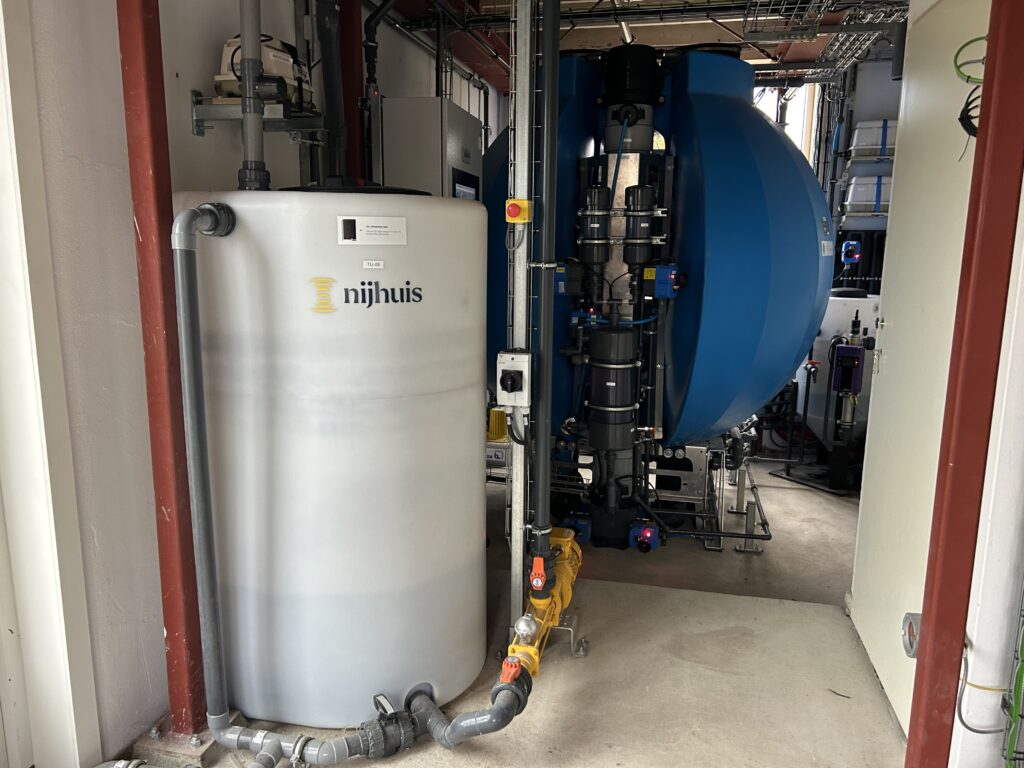
Decentralized water reuse for residential community to achieve water-neutral living – Heuvelstraat
Project’s context and challenges
In the rural village of Silvolde, located in the Dutch Achterhoek region, the Heuvelstraat pilot project tackles a growing regional crisis: prolonged droughts caused by sandy soils and declining groundwater levels, combined with increasing pressure on the drinking water supply due to urban development. Traditional centralized water systems—where rainwater is drained away and wastewater transported to distant treatment plants—no longer provide a sustainable solution.
The challenge: design and implement a decentralized, circular water system that allows residents to live water-neutral and sewageless, by harvesting and reusing water within each household.
- Industrial
- Pharma & personal care
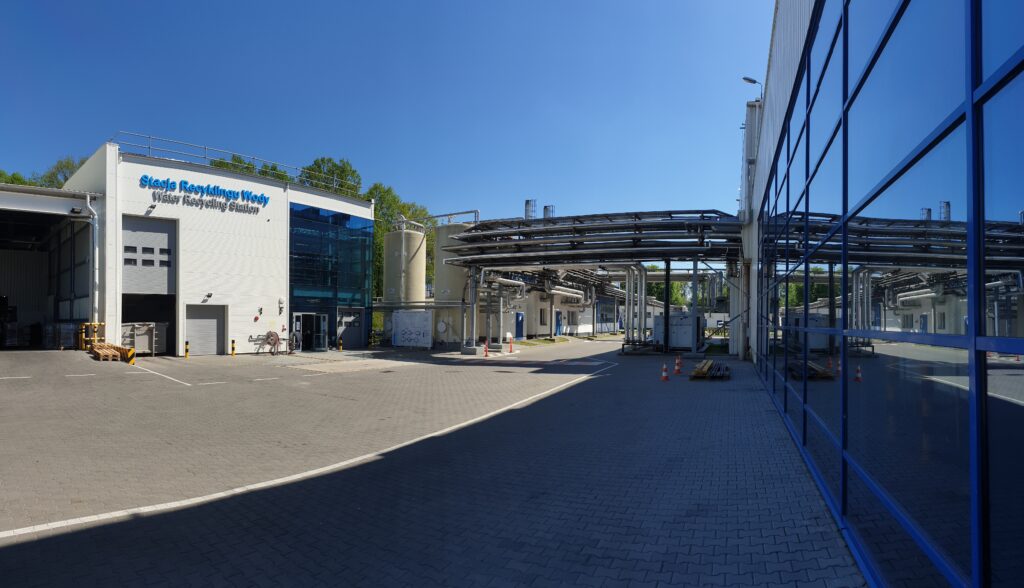
Water reuse for personal care manufacturing to reduce water consumption – L’Oréal
Context
As part of its global sustainability initiative “Sharing Beauty with All”, L’Oréal committed to reducing water consumption, waste output, and CO₂ emissions by 60% compared to 2005 levels. At its Warsaw plant, the challenge was to implement a water recycling system that could recover high-quality water for reuse in production processes, while also showcasing environmental leadership. The project needed to ensure continuous water availability, operational safety, and long-term reliability.
Solution
Nijhuis Saur Industries designed and built a Water Recycling Station using a combination of physical-chemical pretreatment, biological treatment with MBR, ultrafiltration, and reverse osmosis. The system includes the i-DOSE intelligent dosing system for optimized chemical use and online chloride monitoring to manage recovery rates. The plant is fully automated and integrated into the factory’s operations, with a modern design that fits the site’s aesthetics.
- Industrial
- Pulp & Paper
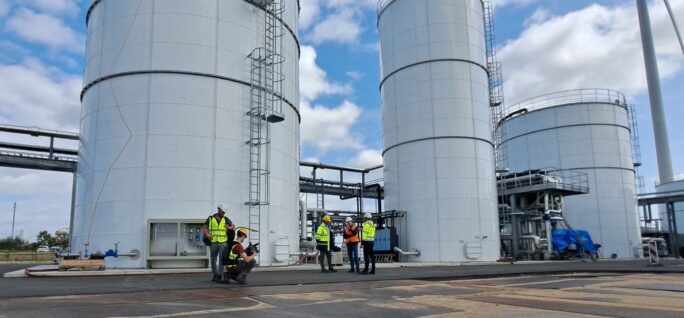
Wastewater treatment for recycled paper production to improve water recovery and generate biogas
Context
A leading RCF-based board mill in Southern Turkey is upgrading its effluent treatment plant to meet stricter discharge limits and improve resource recovery. The client, committed to sustainable production of container board paper from wastepaper, sought a solution that would close the water loop, recover biogas, and enhance operational efficiency. After evaluating multiple technologies and reference plants, the client selected the combined expertise of NSI Flootech and NSI Econvert to deliver a future-ready solution.
Solution
Nijhuis Saur Industries (NSI), part of Saur Group, through its technology companies NSI Flootech and NSI Econvert, is delivering and commissioning the upgraded effluent treatment plant. The solution integrates advanced biological treatment, anaerobic digestion, biogas desulphurization, and calcium removal into the existing plant configuration. This enables the client to recover energy, reduce environmental impact, and future-proof its operations.
- Municipal
- Municipal wastewater
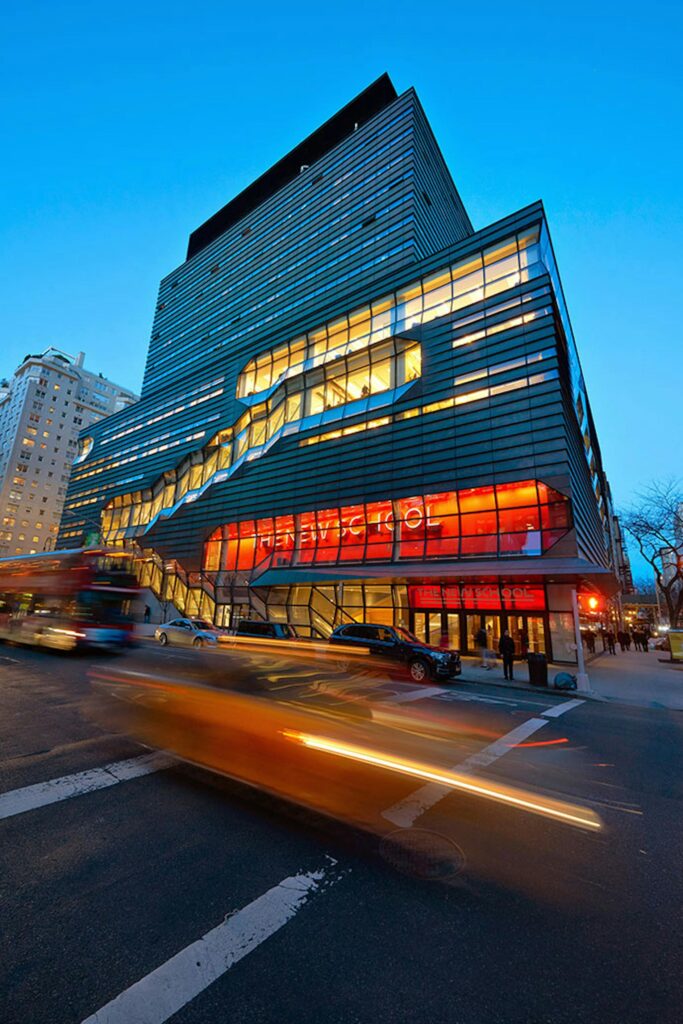
Wastewater reuse for educational facility to reduce drinking water consumption – The New School
Context
The New School University in New York City aimed to drastically reduce potable water use and wastewater discharge at its University Center on 5th Avenue. With sustainability and LEED certification as key drivers, the university sought an innovative on-site water recycling system. The challenge: treat all blackwater and stormwater within a dense urban footprint and reuse it for non-potable applications such as laundry, toilet flushing, and cooling.
Solution
Natural Systems Utilities (NSU), part of Nijhuis Saur Industries, designed and operates a decentralized water reuse system at The New School’s University Center. The system treats all wastewater—including from toilets, sinks, showers, and laundry—using a membrane bioreactor followed by ozone and UV disinfection. Stormwater detained by green roofs is also reclaimed. The treated water is reused for non-potable applications, with surplus safely discharged to the city sewer.