

Your challenges
Municipalities today face increasing pressure to manage wastewater efficiently, safely, and sustainably, often with limited resources and aging infrastructure.


- Municipal
- Industrial
Micropollutant removal solutions
- Micropollutants
- Wastewater
- Drinking water
- Source water
- Industrial water
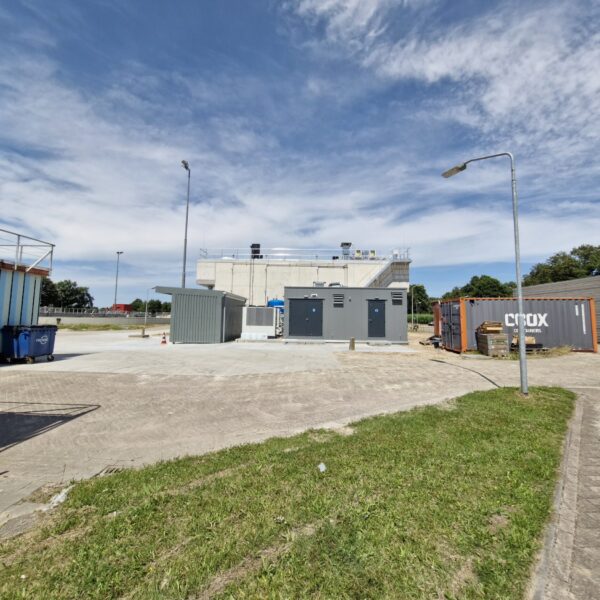
Micropollutants such as pharmaceuticals, personal care products, pesticides and industrial trace contaminants are increasingly present in wastewater. At the same time, municipalities (...)
- Municipal
- Industrial
PFAS removal & destruction solutions
- PFAS
- Wastewater
- Drinking water
- Source water
- Process water
- Industrial water
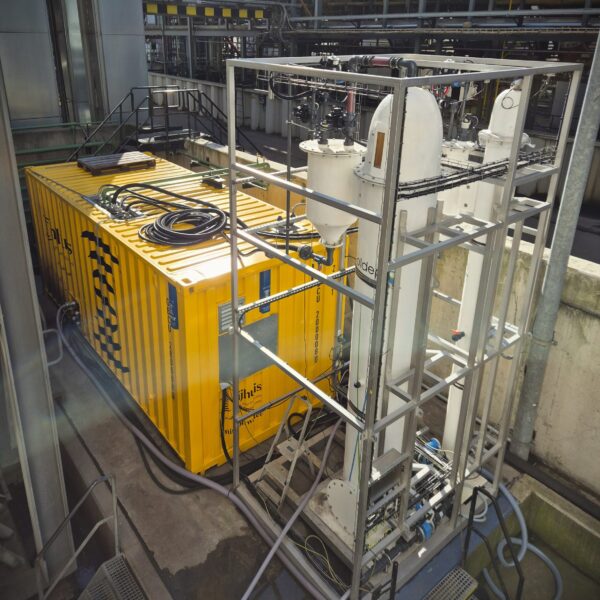
PFAS contamination is creating unprecedented regulatory, operational and financial challenges for industries, municipalities and utilities worldwide. Organizations must comply (...)
- Municipal
- Industrial
Filter and screening systems
- Wastewater
- Drinking water
- Industrial water
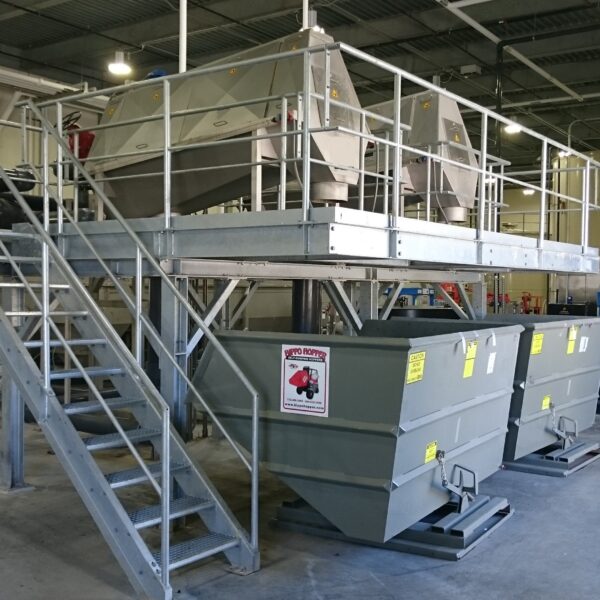
Filter and screening systems remove large particles from surface water and wastewater. By capturing debris early, they prevent pipe blockages and protect your equipment, helping (...)
- Industrial
- Municipal
Coagulation & Flocculation
- Industrial water
- Process water
- Drinking water
- Wastewater
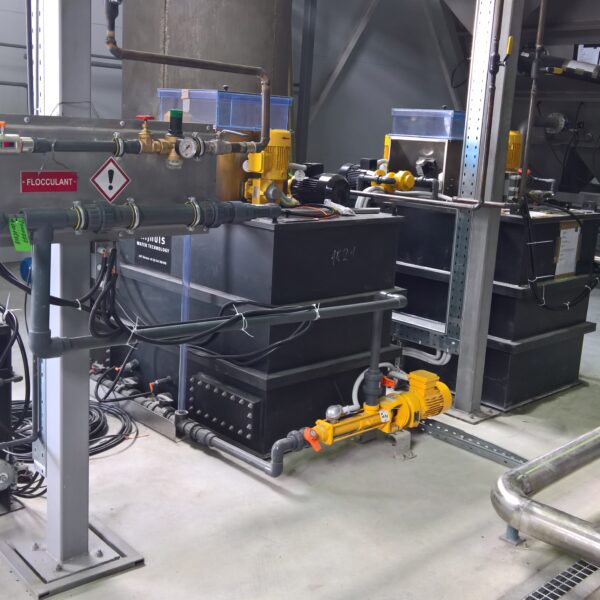
Our coagulation and flocculation solutions are engineered to support efficient solid-liquid separation across industrial and municipal applications.

- Municipal
- Industrial
Dissolved Air Flotation solutions (DAF)
- Drinking water
- Wastewater
- Industrial water
- PFAS
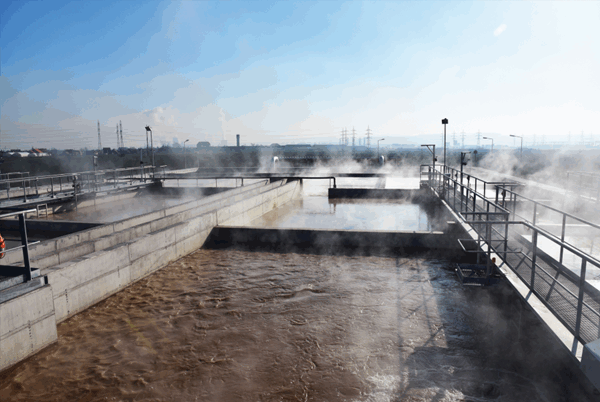
Our DAF systems are engineered to provide high removal efficiency, operational flexibility, and reliable performance under varying conditions.
- Industrial
- Municipal
Aerobic treatment
- Industrial water
- Wastewater
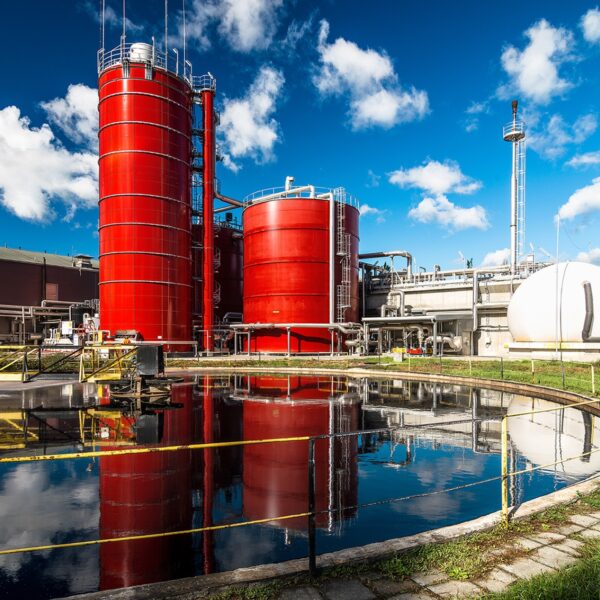
Aerobic biological treatment uses oxygen and microorganisms to remove COD and BOD from wastewater by breaking down organic pollutants into harmless substances. Reliable, efficient, (...)
- Industrial
- Municipal
Anaerobic wastewater treatment
- Industrial water
- Resource Recovery
Anaerobic wastewater treatment is a very effective and sustainable way of removing biodegradable organic compounds (COD/BOD) from wastewater without using oxygen. As the organic (...)

- Industrial
- Municipal
Membrane filtration
- Process water
- Industrial water
- PFAS
- Micropollutants
- Wastewater
- Drinking water
- Source water
- Rainwater
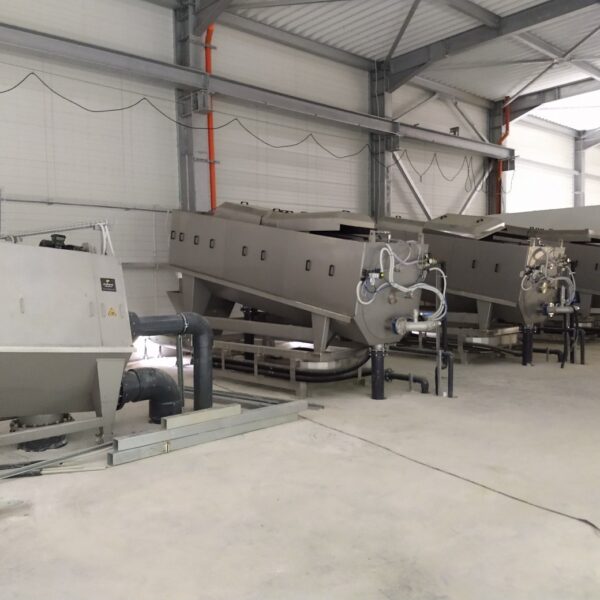
At Nijhuis Saur Industries (NSI), part of Saur Group, we deliver membrane filtration solutions that drive water reuse, resource recovery, and environmental compliance. Our membrane (...)
- Industrial
- Municipal
Sludge management
- Sludge
- Industrial water
- Wastewater
- Resource Recovery
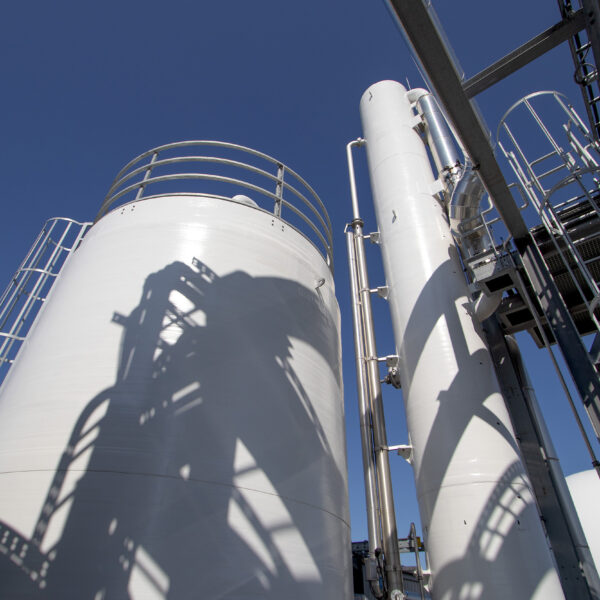
Efficient sludge treatment is essential for sustainable and cost-effective wastewater treatment. At Nijhuis Saur Industries, part of Saur Group, we offer advanced technologies (...)
- Industrial
- Municipal
Biogas desulphurization
- Wastewater
- Resource Recovery
- Industrial water
- Sludge
Where organic material is anaerobically degraded, biogas will be produced. In order to utilize this biogas, it needs the right quality, pressure and humidity. H2S is a specific (...)
- Industrial
- Municipal
Water consultancy services
- PFAS
- Micropollutants
- Process water
- Drinking water
- Industrial water
- Wastewater
- Rainwater
- Source water
- Resource Recovery
- Sludge
If you are reviewing your (waste)water management strategy and treatment objectives, you may run into several questions. To meet sustainability targets, optimize or debottleneck (...)

- Municipal
- Industrial
Digital solutions
- PFAS
- Micropollutants
- Wastewater
- Drinking water
- Source water
- Rainwater
- Resource Recovery
- Sludge
- Process water
- Industrial water
In today’s rapidly evolving technological landscape, digital solutions are essential for optimizing water management processes. At Saur, we leverage advanced digital tools and (...)

Dive into all our municipal wastewater solutions
Discover the NSI Municipal wastewater showroom:

References in municipal wastewater
Discover more references
- Municipal
- Municipal wastewater
Advanced micropollutant removal for sewage treatment plant to reduce pharmaceutical residues – HDSR
Context
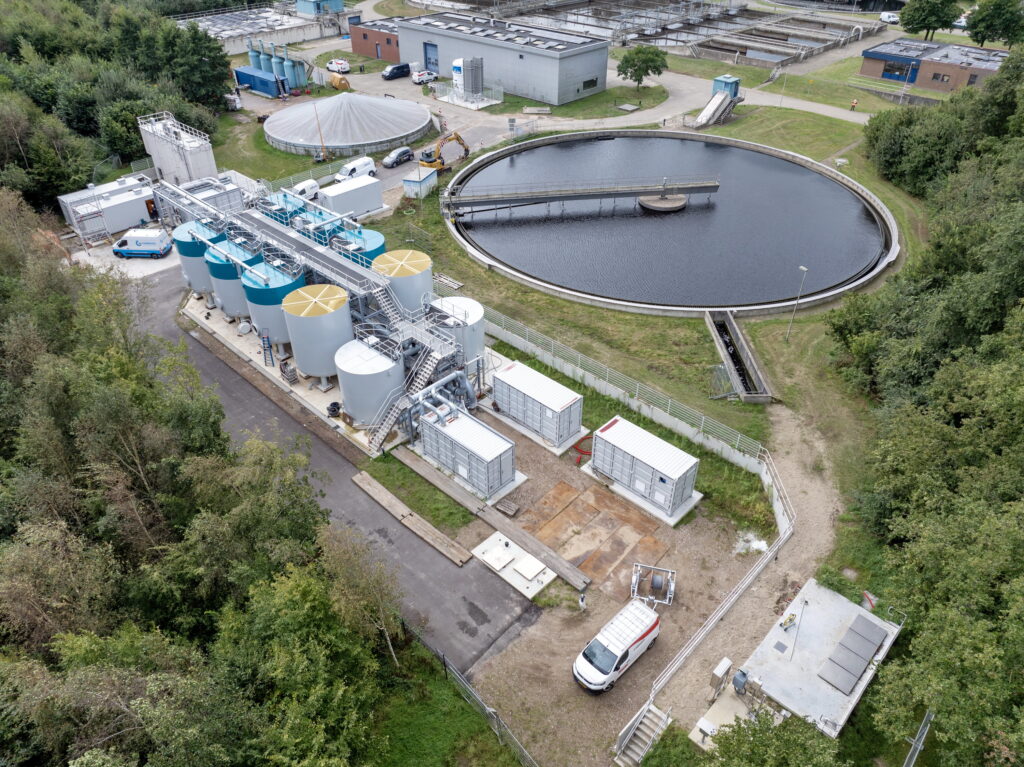
The Houten wastewater treatment plant (WWTP) in the Netherlands was identified as a national hotspot for medical residues in effluent. These residues pose a risk to the environment and drinking water sources, particularly the nearby ‘Lek’ Canal. To address this, water authority Hoogheemraadschap De Stichtse Rijnlanden commissioned Nijhuis Saur Industries to deliver a full-scale ozone installation for advanced treatment. The project also reflects a shift in Dutch municipal contracting toward collaborative “Construction Team” tenders for complex technologies.
Solution
Nijhuis Saur Industries, in partnership with Pannekoek GWW, Moekotte and Witteveen+Bos, designed and delivered a full-scale ozone treatment system for the Houten WWTP. The system targets the removal of pharmaceutical residues, improving effluent quality and protecting downstream water sources. The project was executed under a Construction Team tender model, enabling faster design, better risk allocation, and more accurate budgeting.
- Municipal
- Municipal wastewater
Advanced micropollutant removal for sewage treatment plant to improve water quality – WWTP Winterswijk
Waterschap Rijn en IJssel aimed to upgrade WWTP Winterswijk to further improve the water quality of the Groenlose Slinge, a sensitive lowland stream with vulnerable ecosystems. The existing wastewater treatment plant, designed for a capacity of 92,000 population equivalents (PE) and a flow of up to 860 m³/h, required an advanced treatment step to remove nutrients and pharmaceutical residues more effectively.
The challenge was to implement a future-proof and robust treatment concept capable of removing micropollutants, phosphorus, and ammonium while minimizing ecological risks and avoiding harmful by-products such as bromate. At the same time, the solution had to integrate seamlessly with the existing treatment infrastructure and support long-term operational flexibility.

- Municipal
- Municipal drinking water
Pump performance optimization for water utilities to reduce energy costs
- Municipal
- Municipal wastewater
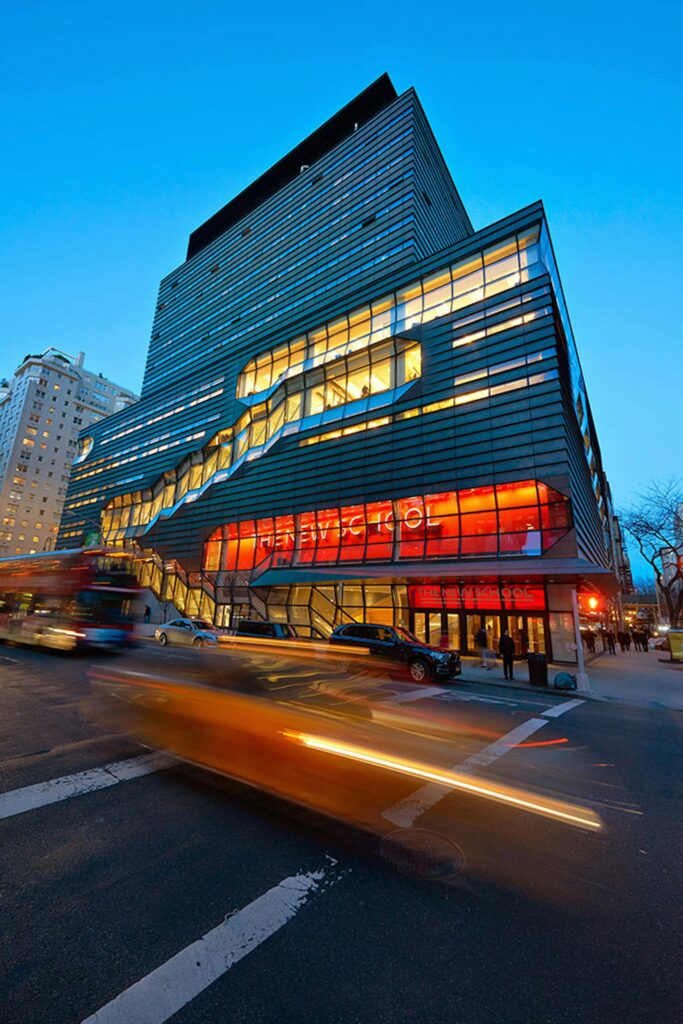
Wastewater reuse for educational facility to reduce drinking water consumption – The New School
Context
The New School University in New York City aimed to drastically reduce potable water use and wastewater discharge at its University Center on 5th Avenue. With sustainability and LEED certification as key drivers, the university sought an innovative on-site water recycling system. The challenge: treat all blackwater and stormwater within a dense urban footprint and reuse it for non-potable applications such as laundry, toilet flushing, and cooling.
Solution
Natural Systems Utilities (NSU), part of Nijhuis Saur Industries, designed and operates a decentralized water reuse system at The New School’s University Center. The system treats all wastewater—including from toilets, sinks, showers, and laundry—using a membrane bioreactor followed by ozone and UV disinfection. Stormwater detained by green roofs is also reclaimed. The treated water is reused for non-potable applications, with surplus safely discharged to the city sewer.
- Municipal
- Municipal wastewater
Decentralized sewage treatment for residential communities to recover resources and remove micropollutants – Oosterwold
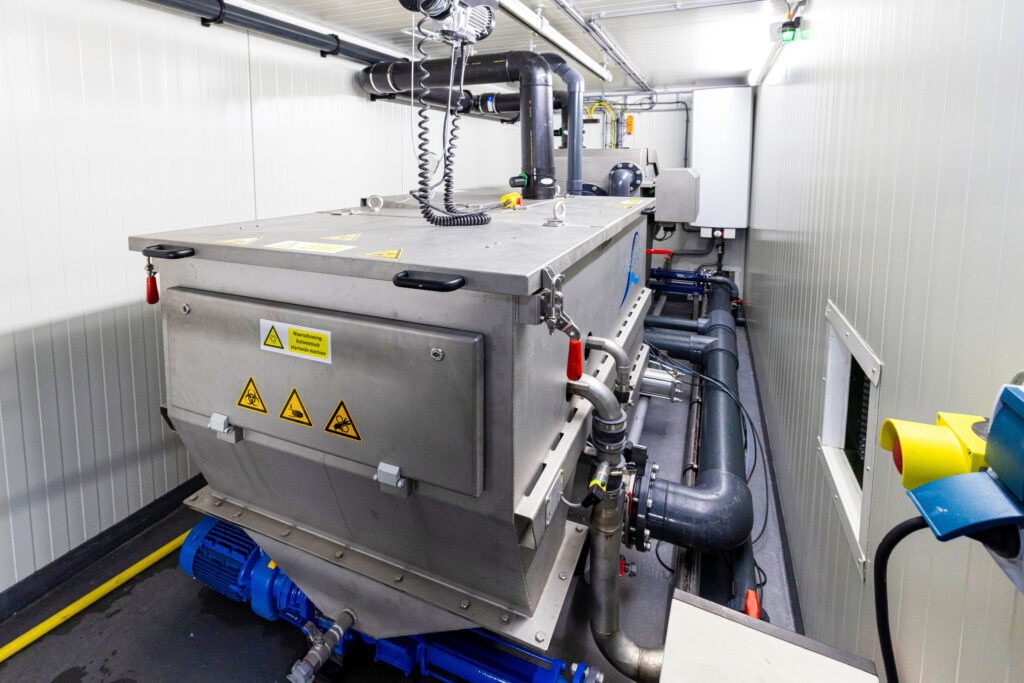
The Oosterwold district in Almere is a unique residential area where sustainability, self-sufficiency and innovation are central design principles. To support this vision, a decentralised sewage treatment plant was developed to serve approximately 800 households. The challenge was to create a compact, future-proof system that not only treats wastewater safely, but also recovers valuable resources and removes micro-pollutants such as pharmaceutical residues.
In a consortium with Royal Oosterhof Holman (main contractor), Akanova and Van Remmen UV Technology, CirTec played a key role in delivering an innovative solution. The system had to perform reliably under fluctuating influent conditions while meeting strict environmental and water quality requirements. The municipality of Almere deliberately chose an unconventional approach, pushing technological boundaries to realise a sustainable, circular water treatment concept.
- Building facilities
- Municipal
- Municipal wastewater
- Municipal drinking water
Decentralized water reuse for residential community to achieve water-neutral living – Heuvelstraat
Project’s context and challenges
In the rural village of Silvolde, located in the Dutch Achterhoek region, the Heuvelstraat pilot project tackles a growing regional crisis: prolonged droughts caused by sandy soils and declining groundwater levels, combined with increasing pressure on the drinking water supply due to urban development. Traditional centralized water systems—where rainwater is drained away and wastewater transported to distant treatment plants—no longer provide a sustainable solution.
The challenge: design and implement a decentralized, circular water system that allows residents to live water-neutral and sewageless, by harvesting and reusing water within each household.

- Municipal wastewater
Emergency wastewater treatment for municipality to prevent overflow and protect the environment – city of Pornic
The coastal town of Pornic in France experienced extreme wastewater overflow following periods of heavy rainfall. The Salettes wastewater treatment plant (WWTP), designed for a capacity of 8,000 m³/day, received peak inflows of up to 22,000 m³/day. This overload resulted in untreated wastewater being discharged into the sea, causing shellfish contamination and posing a serious economic threat to the region’s oyster farming industry.
Local authorities required an urgent and reliable temporary treatment solution capable of rapidly increasing treatment capacity while ensuring environmental protection and regulatory compliance during peak hydraulic loads and ongoing infrastructure upgrades.