
Your challenges
Wastewater treatment plants need to achieve increasingly stringent water quality targets while working within existing infrastructure, footprint and operational constraints.

Meeting new micropollutant regulations
The revised European Urban Wastewater Treatment Directive (UWWTD) increases the focus on the removal of pharmaceuticals and other organic micropollutants from municipal wastewater. Utilities need reliable advanced treatment technologies that can achieve high removal performance while remaining practical and economically viable

Upgrading existing infrastructure
Many wastewater treatment plants have limited available space and cannot accommodate large new civil structures. Operators therefore need compact treatment technologies that can be integrated into existing plants with minimal disruption and maximum flexibility.

Balancing performance and sustainability
Advanced wastewater treatment should deliver the required water quality without unnecessary energy consumption, ozone use or operational complexity. Efficient ozone transfer, optimized dosing and appropriate process design are essential to achieving the right balance between treatment performance and lifecycle costs.

Ensuring safe and reliable operation
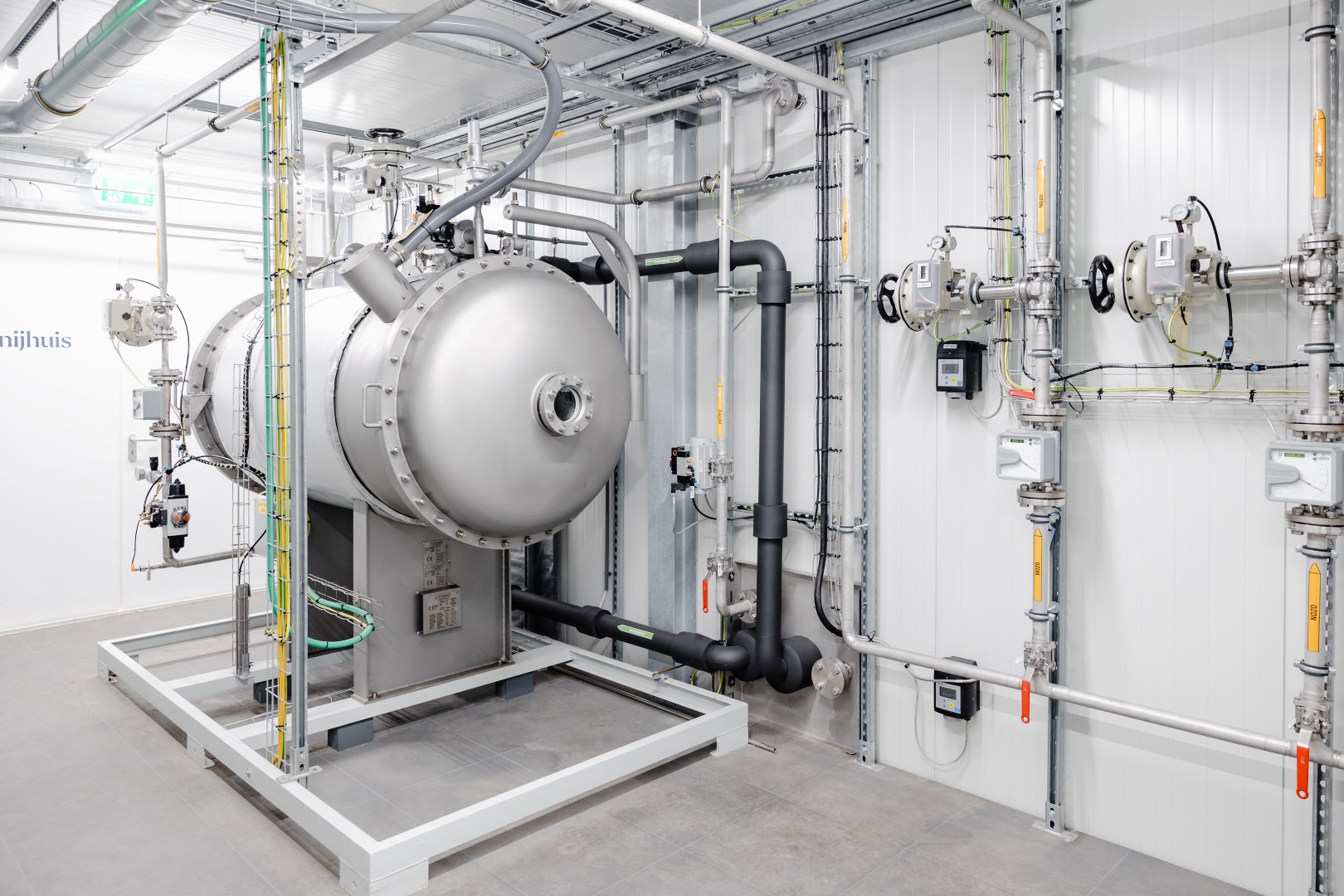
Ozone is a powerful oxidant and requires controlled generation, transfer, dosing, monitoring and residual ozone destruction. Successful implementation therefore requires both the right technology and the process engineering expertise to design and operate a safe and reliable system.
How does it work ?
The process
Nijhuis ozone solutions generate ozone on-site and transfer it efficiently into the wastewater, where it reacts with pharmaceuticals, organic micropollutants and other difficult-to-remove contaminants.
The ozone oxidation process transforms these compounds and improves the quality of the treated effluent.
The optimal ozone transfer technology depends on the wastewater characteristics, treatment objectives, hydraulic conditions, available footprint and requirements of the existing or new treatment plant.

Key figures
>80%
micropollutant removal for targeted pharmaceutical residues.
3 ozone transfer technologies
diffusers, Venturi injection and Ozone Strong Water.
>75%
Reduction in required reaction volume with OSW compared with conventional ozonation systems.
References
- Municipal
- Municipal wastewater
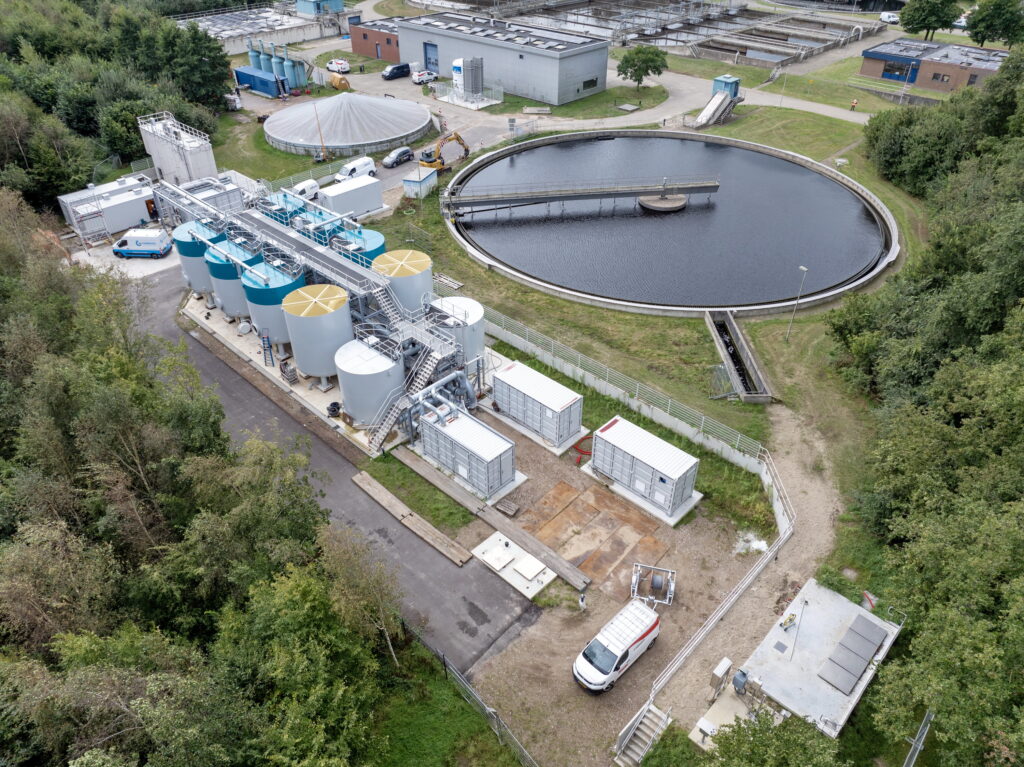
Advanced micropollutant removal for sewage treatment plant to improve water quality – WWTP Winterswijk
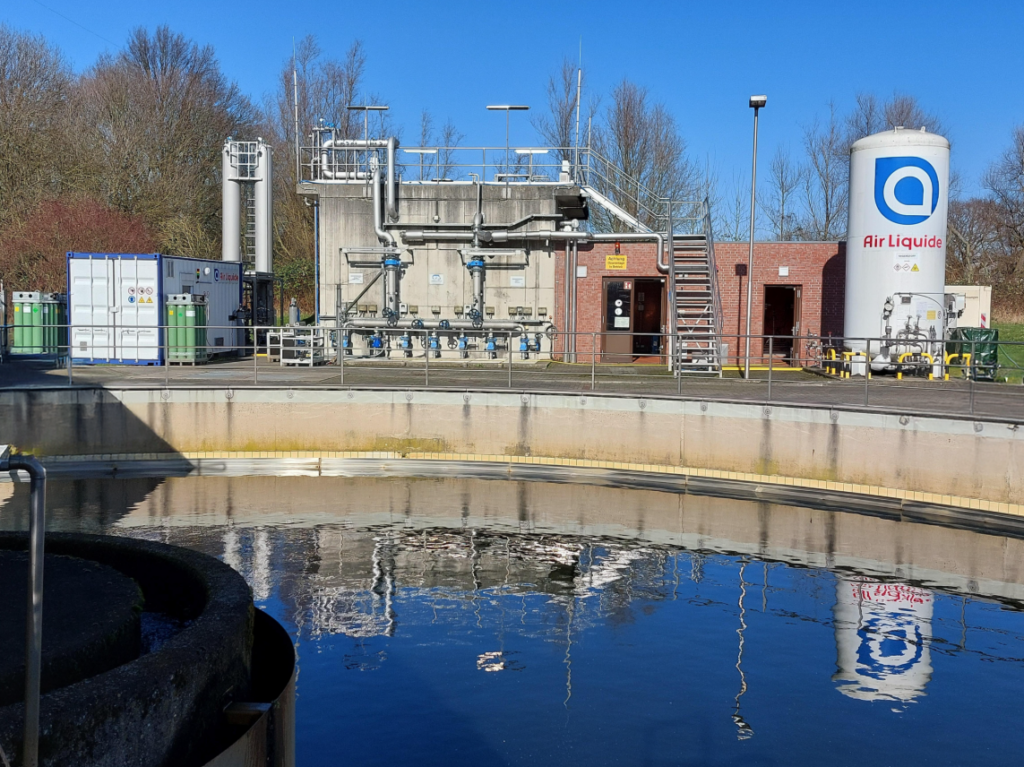
Waterschap Rijn en IJssel aimed to upgrade WWTP Winterswijk to further improve the water quality of the Groenlose Slinge, a sensitive lowland stream with vulnerable ecosystems. The existing wastewater treatment plant, designed for a capacity of 92,000 population equivalents (PE) and a flow of up to 860 m³/h, required an advanced treatment step to remove nutrients and pharmaceutical residues more effectively.
The challenge was to implement a future-proof and robust treatment concept capable of removing micropollutants, phosphorus, and ammonium while minimizing ecological risks and avoiding harmful by-products such as bromate. At the same time, the solution had to integrate seamlessly with the existing treatment infrastructure and support long-term operational flexibility.

- Municipal
- Municipal wastewater
Advanced micropollutant removal for sewage treatment plant to reduce pharmaceutical residues – HDSR
Context
The Houten wastewater treatment plant (WWTP) in the Netherlands was identified as a national hotspot for medical residues in effluent. These residues pose a risk to the environment and drinking water sources, particularly the nearby ‘Lek’ Canal. To address this, water authority Hoogheemraadschap De Stichtse Rijnlanden commissioned Nijhuis Saur Industries to deliver a full-scale ozone installation for advanced treatment. The project also reflects a shift in Dutch municipal contracting toward collaborative “Construction Team” tenders for complex technologies.
Solution
Nijhuis Saur Industries, in partnership with Pannekoek GWW, Moekotte and Witteveen+Bos, designed and delivered a full-scale ozone treatment system for the Houten WWTP. The system targets the removal of pharmaceutical residues, improving effluent quality and protecting downstream water sources. The project was executed under a Construction Team tender model, enabling faster design, better risk allocation, and more accurate budgeting.