
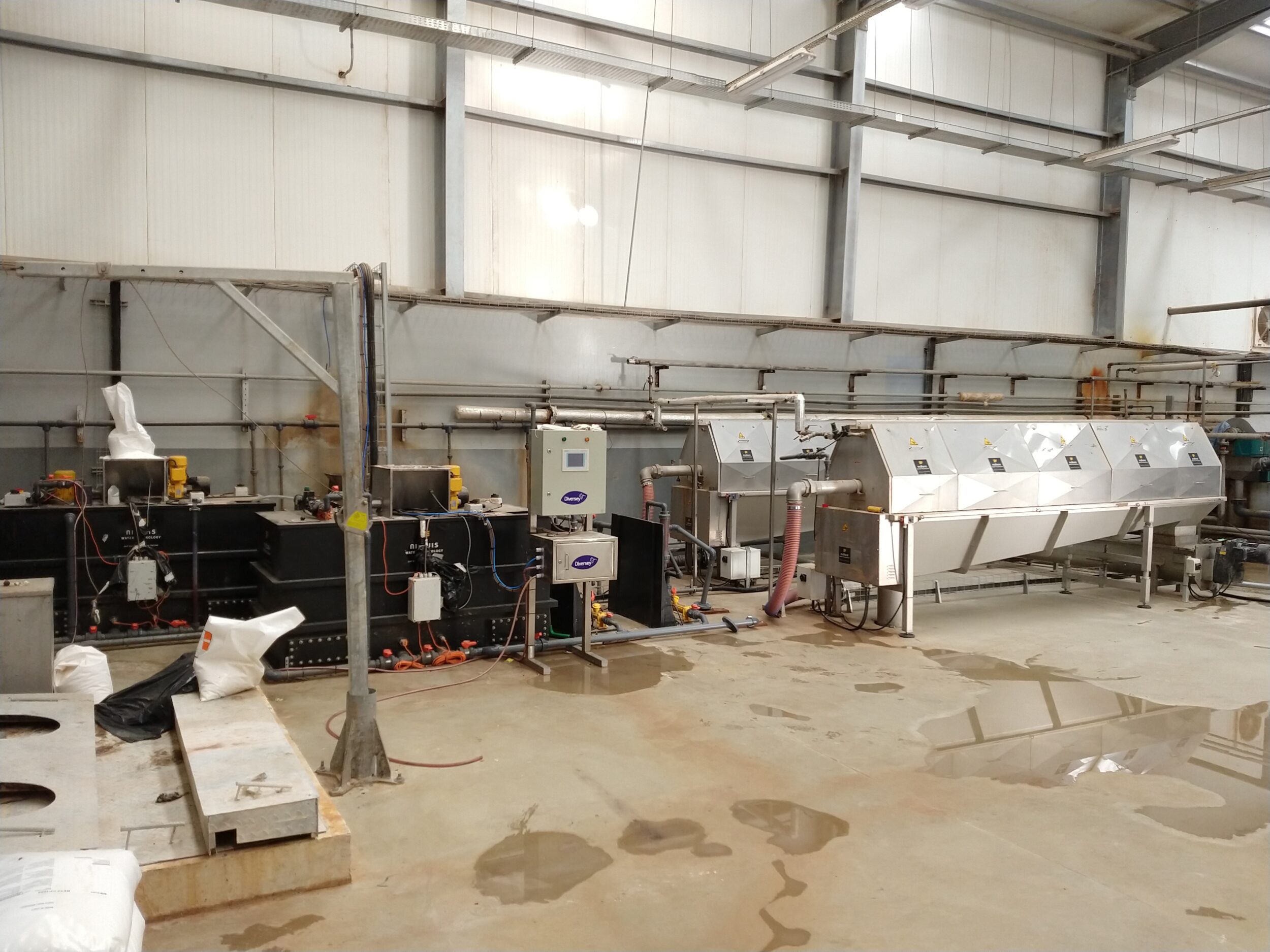
Your challenges
High downstream dewatering costs
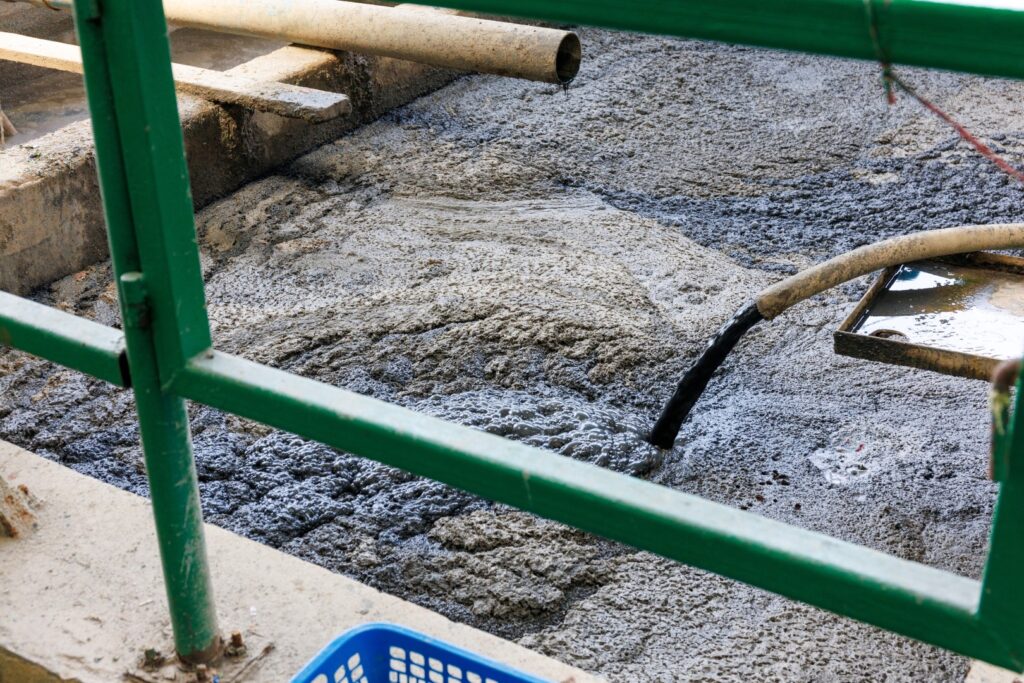
Dewatering thin biological sludge directly requires equipment to process large volumes of water along with the solids. By thickening sludge before final dewatering, plants can significantly reduce the volume entering downstream equipment and potentially reduce the required equipment size, investment and energy consumption.
Limited biological treatment capacity
Increasing sludge concentrations within an existing wastewater treatment process can help optimize the use of available biological treatment capacity. Effective sludge separation and thickening can support better solids management without automatically requiring additional civil infrastructure.
Fluctuating sludge characteristics
Sludge properties and hydraulic flows can vary significantly during wastewater treatment operation. Operators need a filtration system that can handle changing flows and sludge characteristics while maintaining reliable solids capture and allowing the filtration process to be adjusted when required.
How does it work?
Our process
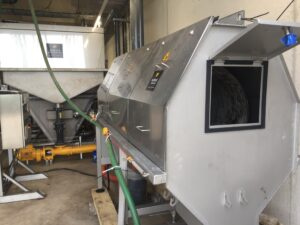
NDF is an inside-fed rotary drum filter that uses gravity to separate liquid from suspended solids. The drum is covered with an exchangeable filter cloth with different available pore sizes, allowing the filtration system to be selected according to the application and sludge characteristics.
As sludge enters the rotating drum, the liquid passes through the filter cloth while suspended solids are retained on the inside of the drum. The retained solids form a filter cake that is transported towards the sludge discharge as the drum rotates.
The NDF is equipped with a self-cleaning system to maintain filtration performance during continuous operation. Spray cleaning with water is also possible when required.

Key figures
Up to 6% DS
for biological excess sludge applications.
40–250 µm
available filter cloth pore sizes.
References
See all our references
- Industrial
- Food & Beverage
Wastewater treatment for poultry processing to ensure compliant discharge – Vinnytsia Poultry Farm
Project’s context & challenges
Myronivsky Hleboproduct (MHP) is a dynamic and fast-growing company in the Ukraine, based on the unique model of vertical integration. MHP is one of the leaders of the agrarian market in poultry segment. LLC Vinnytsia Poultry Farm is the largest poultry farm in Europe, and is set up with equipment using the most up to date technology.
In order to treat the wastewater of the factory, Nijhuis designed and realized a complete pre-treatment, secondary treatment and tertiary treatment system to discharge clean effluent into the Ukrainian river. The water is produced by the slaughter lines (+/- 90%) and the remaining water (+/- 10%) comes from the rendering and hatchery production, crate box washers, car washers and municipal water.