Your challenges
Achieving high-quality wastewater treatment can be challenging when space is limited, water quality is required, or an existing treatment plant needs to be upgraded.
High effluent quality requirements
Many applications require a consistent, high-quality effluent with very low solids content. Conventional clarification may not provide the separation performance required for demanding discharge or reuse applications.
Limited footprint
Available space can restrict the expansion of a wastewater treatment plant.
Increasing water reuse requirements
Reusing treated wastewater can reduce dependance on freshwater and support a more circular approach to water management.
Upgrading existing infrastructure
Existing tanks and infrastructure can often be incorporated into an MBR upgrade.
Changing operating conditons
Industrial and municipal wastewater flows and loads can vary
How does it work ?
The process
The Nijhuis BIOCTOR-MBR combines biological wastewater treatment with membrane separation. Microorganisms in the biological process break down organic pollution and support nutrient removal while the membranes provide the physical barrier for separating treated water from the biomass.
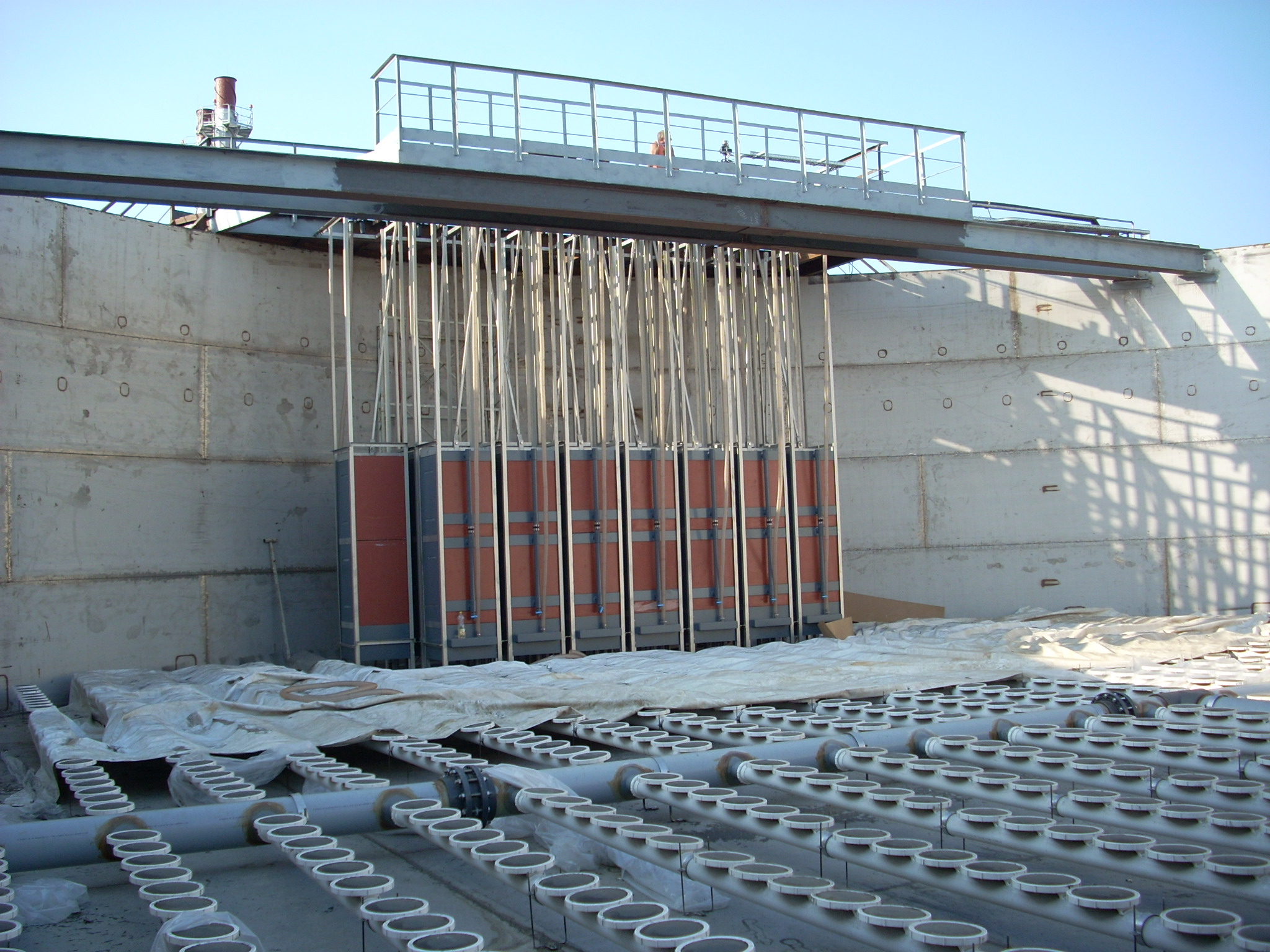
The submerged membranes can be installed directly in the aeration tank or in a separate dedicated membrane tank. Where the membranes are integrated into the biological tank, no sludge return is required.
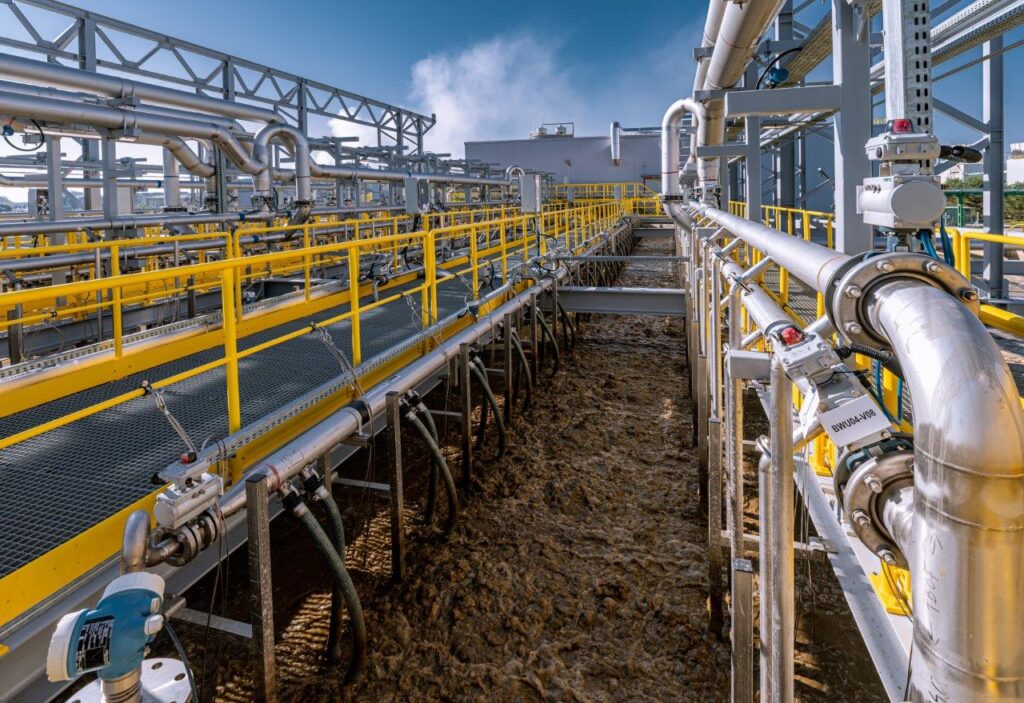
During membrane separation, treated water passes through a semipermeable membrane, while suspended solids and biomass are retrained in the biological system. In a submerged MBR, membrane modules are immersed in the bioreactor or in a separate membrane tank; permeate is withdrawn by suction or static head, and coarse-bubble aeration. Air is used to scour the membrane surface and limit fouling. In an external MBR, mixed liquor is pumped from the bioreactor through membrane modules located outside the tank, typically using crossflow or low-speed crossflow to control the build-up of solids accumulation; the retained biomass is returned to the biological process. Depending on the selected membrane technology, operation may include periodic filtration and relaxation or backwashing, together with application-specific chemical cleaning.
Applications
The Nijhuis BIOCTOR-MBR can be considered for a range of wastewater treatment applications where high-effluent, compact treatment, or reuse are important:
- Industrial wastewater: biological treatment and solids separation
- Municipal wastewater: compact treatment and high-quality effluent
- Food and beverage: wastewater treatment and reuse
- Meat processing and slaughterhouse: treatment of high-load wastewater
- Chemical and industrial processes: biological treatment and capacity upgrades
- Water reuse: treatment as part of a reuse scheme
- Plant upgrades: increasing capacity while using existing tanks and infrastructure
- Pretreatment for downstream processes: where high-quality membrane-treated effluent is required

Our positive impact
Produce High-quality effluent
The membranes provide an effective physical barrier for separating biomass and suspended solids from treated water. This supports consistent effluent quality and can create opportunities for discharge or further treatment for reuse.
Reduce footprint
MBR combines biological treatment and membrane separation in a compact configuration. This can be particularly valuable where available space is limited or where additional treatment capacity needs to be integrated into an existing site.
Support water reuse
The high-quality effluent produced by MBR can be suitable for reuse applications when combined with the treatment steps required for the intended water quality. The Stonehenge reference, for example, used MBR-treated wastewater for toilet reuse.
Increase treatment capacity
MBR can be used to modernize existing biological wastewater treatment plants.
Adapt the treatment concept to your needs
The Nijhuis BIOCTOR-MBR can be configured using different membrane concepts, including traditional submerged flat-sheet MBR, crossflow MBR, low-speed crossflow MBR, and MBBR combined with low-speed crossflow UF. This allows the treatment approach to be matched to the application and overall process configuration.

Key figures
MBR concepts
Submerged flat sheet including back washable membranes, crossflow, low-speed crossflow, MMBR + LowSpeed CF-UF
30 m³/day to 13,500 m³/day
Example capacities
Contact our experts
Frequently asked questions
The Nijhuis BIOCTOR-MBR is a membrane bioreactor solution that combines biological wastewater treatment with membrane separation. The biological process treats organic pollutants and nutrients, while the membranes separate treated waster from biomass.
MBR provides a compact treatment configuration, high performance for suspended solids removal, high-quality effluent, and opportunities for water reuse. It can also offer operational flexibility and can be integrated into existing infrastructure.
Yes. MBR can be used to modernize existing biological wastewater treatment plants and reuse existing tanks where suitable. At specific reference cases, we used existing tanks while increasing both hydraulic capacity and treatment performance.
The membranes can be installed directly in the aeration tank or in a separate dedicated membrane tank. The preferred configuration depend on the application, existing infrastructure, footprint, and overall process desingn.