
Enschede: A strategic hotspot
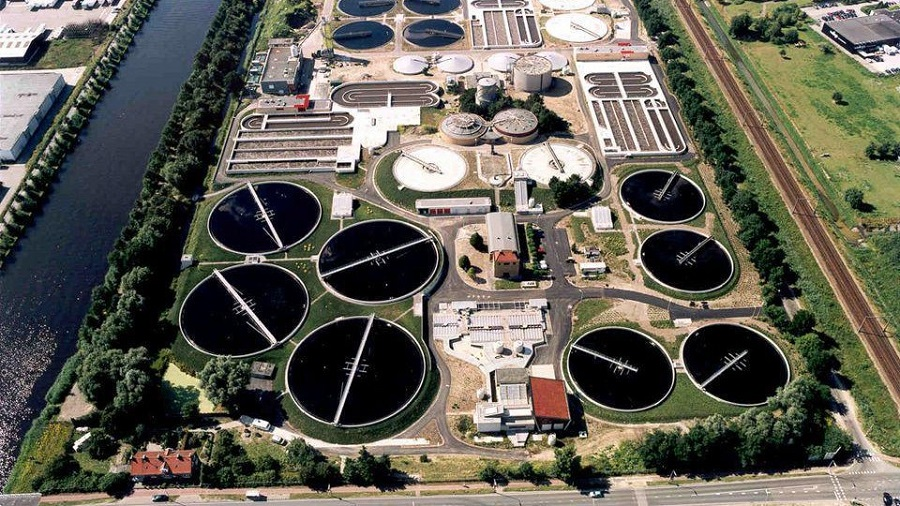
The choice of Enschede as a test location is no coincidence: according to a long-term monitoring program by STOWA, the city is a clear hotspot for pharmaceutical residues.
“In the hotspot analysis, Enschede is marked red due to the high concentrations of pharmaceutical residues in the wastewater, driven by significant urban inflow from numerous healthcare facilities and an academic hospital.”
Technical solution
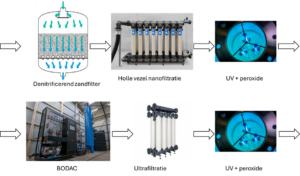
Starting in May 2026, a 50 m³/h demonstration plant will be commissioned for a period of 18 months. The applied technology for the removal of organic micropollutants is advanced oxidation. To enhance this oxidation process, two different membrane technologies will be compared: hollow fiber nanofiltration (HFNF) and ultrafiltration (UF).
The effluent from the WWTP cannot be directly fed to the membranes; therefore, two different types of pre-treatment will be demonstrated: sand filtration and a biologically oxygen-dosed activated carbon filter (BODAC).
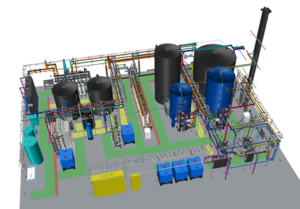
Working at demonstration scale is essential to serve as a reference for (inter)national implementation of the concept. In addition, the scale of the DEMO project is important to properly assess the impact and treatability of concentrated streams across the entire WWTP, in particular:
- The effect of recirculation to the biological treatment stage (accumulation of contaminants).
- Targeted treatment of problematic substances in the concentrate, such as the application of BODAC or multiple membrane stages.
- Minimization of the concentrate through optimal membrane selection.
More than just technology
The client also aims to gain insight into cost development, operational management, social acceptance, and the costs of scaling up. Our unique process approach focuses on efficient product development, in which the demo design is continuously evaluated against full-scale implications.
The technologies tested in the demonstration must achieve a minimum removal efficiency of 80%, the benchmark set by the future European Urban Wastewater Directive. Some technologies already reach up to 95%, but it is necessary to assess whether this level is truly required.
Potential for Upcycling into Freshwater
Another major societal water challenge is the shortage of clean freshwater. In Twente, ensuring sufficient drinking water supply is already a significant challenge. Existing sources and infrastructure are not enough to keep up with growing demand.
During dry periods, this already leads to difficulties in supplying households with water and places pressure on new housing developments at a time of housing shortages. There are numerous examples of companies that cannot be guaranteed a drinking water connection. Especially during dry periods, when pressure on groundwater reserves increases, the reuse of treated wastewater can play an important role.
To enable the reuse of WWTP effluent, treatment technology must meet the highest standards in terms of efficiency and safety. Therefore, the demonstration places strong emphasis on the quality of the produced water. Being able to treat beyond regulatory requirements means this technological concept can deliver water quality suitable for reuse as a source of freshwater or as an intermediate product that can be economically upgraded into high-grade process water.
Vitens, the Dutch drinking water company, has shown interest in the developments in Enschede, as it is exploring the use of treated wastewater as a source for drinking water production. This concept aligns with broader national ambitions to close water cycles and use available resources more efficiently.
Innovative collaboration model
A unique aspect of the project is the collaboration with Nijhuis Saur Industries, established through a European tender using a “competitive dialogue” approach. This allowed market parties to contribute ideas before the final request was defined, enabling the joint development of the most suitable concept.
Following the demonstration phase, a full-scale installation (Phase 2) is planned by the end of 2028, with a capacity of 500 m³/h. This step is crucial for achieving Vechtstromen’s strategic objectives in water quality, innovation, and sustainability. A third phase is also possible under the contract, allowing for expansion of the installation in Enschede or at another location. This long-term collaboration encourages all parties to remain actively engaged in making this multi-phase project a success.
UPPWATER: Accelerating through value chain collaboration
UPPWATER stimulates the economic growth of the Dutch water technology sector. It is a ten-year programme (until 2032) that promotes deeper collaboration within the innovative water technology value chain, enables pilot and full-scale demonstrations, and removes barriers to accelerate access to global markets.
The programme has a budget of more than €340 million, of which €135 million is funded by the National Growth Fund.
“The government plays a crucial role by supporting programmes such as UPPWATER,” says Ronald Wielinga, COO of Water Alliance, one of the programme’s partners. “Through projects like UPPWATER, we not only gain more knowledge, but we can also better apply Dutch expertise to solve water and environmental challenges in our own country. And we connect these solutions with other stakeholders, both nationally and internationally.”
Nijhuis Saur Industries is in a unique position to further develop the concept together with Vechtstromen, both nationally and internationally, and is committed to making the project a success.